
From Dialogue to Scenario: Co-Creation for Wasbüttel’s Future
Wasbüttel, a village of around 1,800 inhabitants in the district of Gifhorn, is facing profound changes similar to many rural communities: demographic shifts, the climate crisis, digitalisation and the pressures of urbanisation are shaping its future prospects. The municipality therefore aims not only to respond to immediate needs, but also to develop a long-term vision for a sustainable future.
With the question “What might the village of tomorrow look like?”, Mayor Nadine Hering and the local council turned to the Technical University of Braunschweig. As a first step towards developing and discussing a spatial framework for Wasbüttel, students from the ISU – Institute for Sustainable Urbanism – created scenarios for the “Village of the Future” within a collaborative design studio led by Professor Vanessa Miriam Carlow, together with Daniel Grenz, Benedikt Herz and Olaf Mumm.
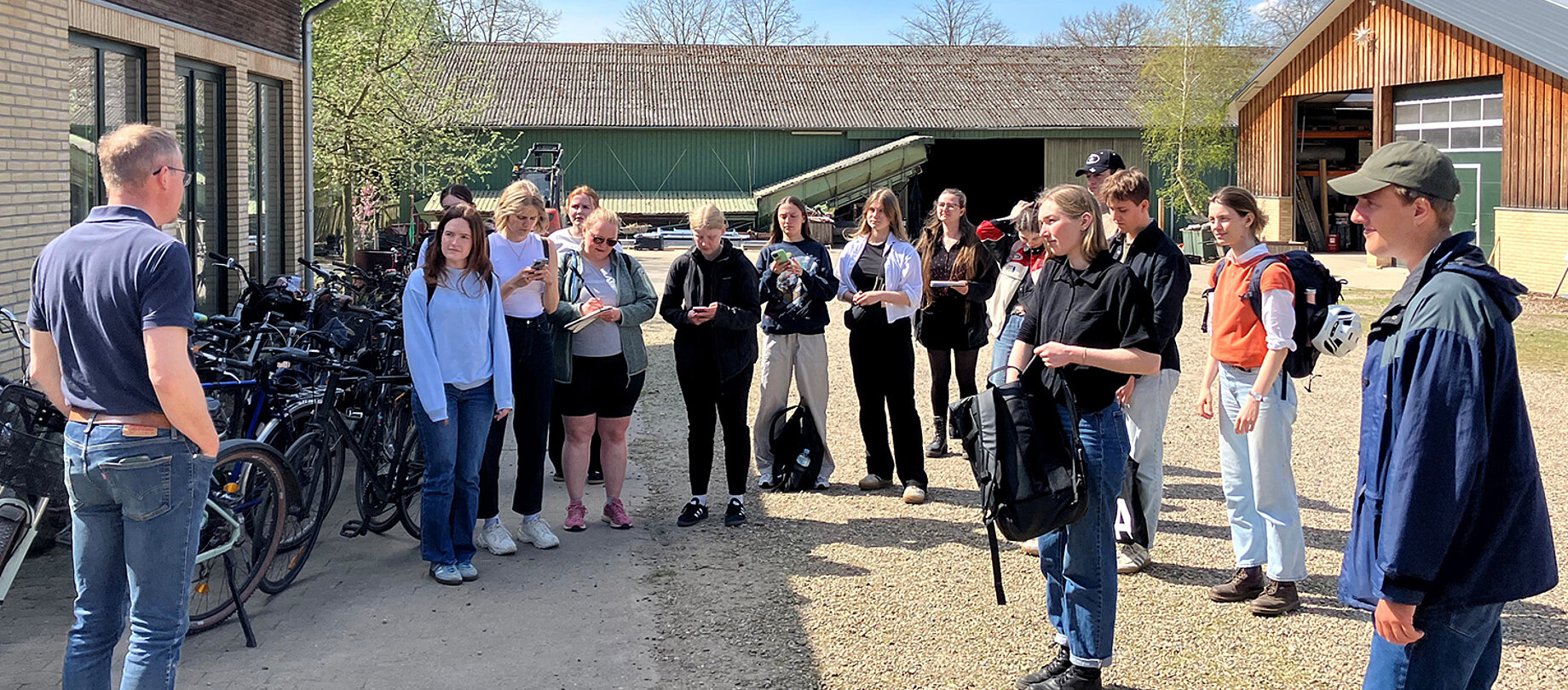
At the heart of the design studio “Wasbüttel – a village in the making?!” was close cooperation with the local community. This was achieved through analogue participation formats – including workshops, site visits and focus group discussions with residents – as well as through speculative design as a methodological approach. On this basis, local opportunities and challenges could be jointly identified, discussed and translated into visionary concepts.
The project is also directly connected to the activities of the ISU within the Leibniz ScienceCampus Postdigital Participation (LWC PdP). Here, ISU researchers explore how analogue and digital forms of participation can work productively together in the “postdigital” age to support processes of societal transformation.
The activities in Wasbüttel illustrate these approaches in practice: analogue formats, speculative design and their translation into tangible visualisations opened up new perspectives. Participation and research were closely interlinked, and knowledge transfer between university and municipality was made visible. In this way, Wasbüttel has become a laboratory for forward-looking approaches in urban and regional development – and an example of how postdigital participation can be made effective at the local level.
Here you can read the original article.

