
The Social Sustainability Ecosystem
for a region that leaves no one behind
The Social Sustainability Ecosystem is an ongoing practice-based research project at the Chair of Service Information Systems at Technische Universität Braunschweig. It was launched in 2025 as “Kick ESS off” and emerged from the university’s Ecoversity initiative. The project is based on the idea that research should not remain confined to academia, but should open up to society and work with diverse regional actors to shape social sustainability in practice.
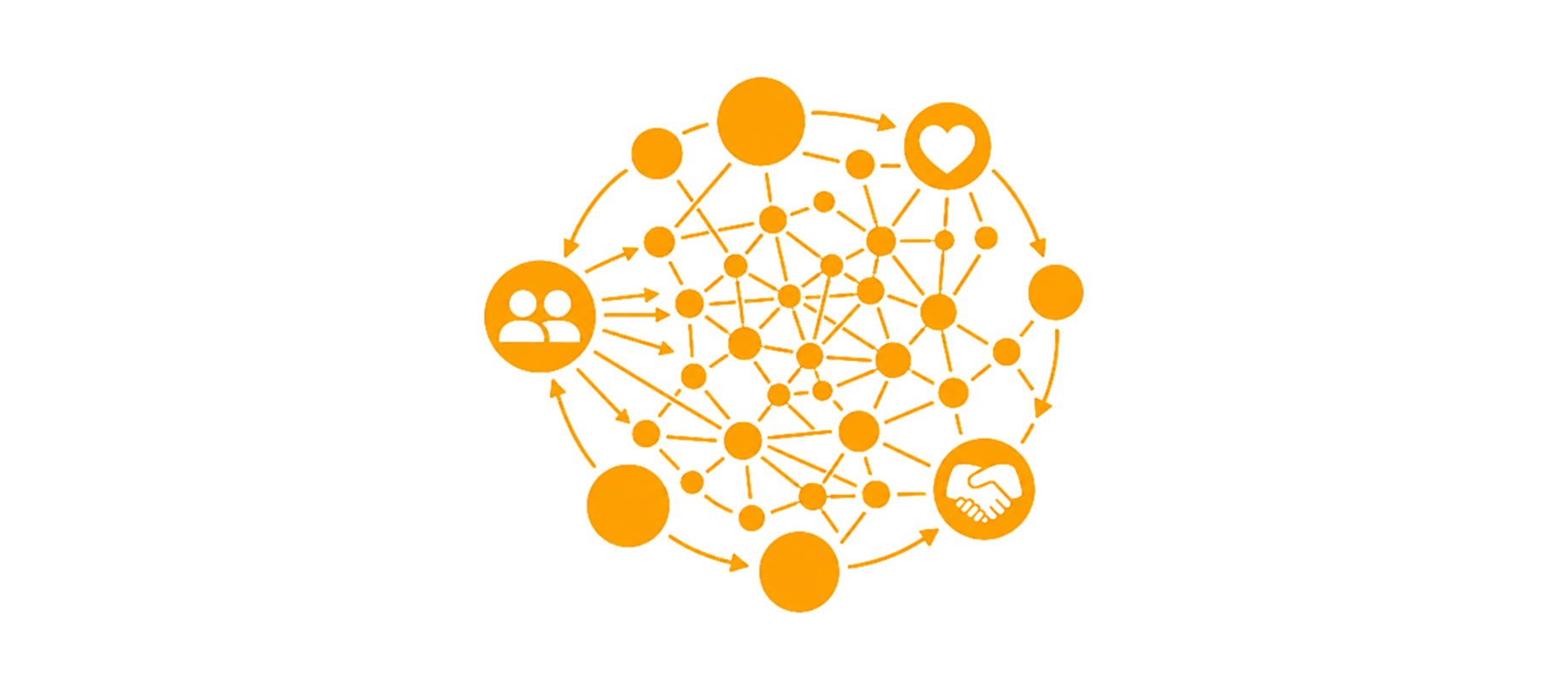
At its core, the project develops a regional ecosystem that brings together people, initiatives, organisations and institutions engaged in questions of social sustainability and committed to developing a shared vision for a socially sustainable region. Key topics include education, social participation, rural areas, freedom of research, community spaces and social sustainability in organisations. The ecosystem creates spaces for dialogue, participation and hands-on collaboration.
Through a range of formats, participants address key issues of social sustainability, initiate joint activities and test new forms of collaboration. At the same time, these formats help to develop the ecosystem itself: What perspectives, resources and skills do different actors contribute? What structures are needed to support long-term collaboration? And how can individual encounters evolve into lasting collective capacity for the region?
The project is studied as a real-world laboratory. It explores how participation, communication and collaboration emerge within such an ecosystem and which conditions help to stabilise them. Following the initial seed funding, the ecosystem continues to grow. Building on the groups, formats and collaborations that have already emerged, the actors involved are working to establish the ecosystem in the Braunschweig region in the long term and to identify potential follow-up funding.
The first project phase was funded through the “Räume für Kollaboration / Spaces for Collaboration” call at TU Braunschweig. Key partners and supporters so far include DenkRaum Braunschweig, ProjectTogether and the Zentrum für Klimaforschung Niedersachsen (ZKfN).

